
How to Do Menu Engineering with Contribution Margin and Popularity
Menu engineering is a strategic approach that helps restaurants understand how each item on the menu contributes to overall profitability. Unlike the traditional way of just listing the food on the menu, menu engineering involves the analysis of the data and the cost of the food to establish which food item on the menu is the most profitable.
This strategy, therefore, helps the restaurant owner gain more insight into how the menu affects the profitability of the restaurant. Some foods on the menu may be the most popular, yet they are not the most profitable, while others may be the most profitable, yet they are not the most popular.
Menu engineering, therefore, helps the restaurant balance the two factors. The idea, therefore, is to ensure the menu offers the customer the food that will be most profitable for the restaurant, yet the customer will be satisfied with the food on the menu. Menu engineering, therefore, becomes a powerful strategy when used appropriately.
Table of Contents
What Contribution Margin Means

Contribution Margin is another significant concept applied in menu engineering. Contribution Margin is the difference between the price at which the menu is being sold and the amount it costs to produce it.
The amount it costs to produce it includes the food costs. The remaining amount is applied to meeting operational expenses and generating profits. For example, if it is being sold at twenty dollars and it costs eight dollars to produce it, then it means it is contributing twelve dollars.
This amount is being applied to meeting operational expenses and generating profits. The restaurants are using this amount to compare and determine which menu is generating more financial value. The concept of Contribution Margin is significant in making informed decisions.
Measuring Menu Item Popularity
Popularity is the second important factor in menu engineering analysis. Profitability is concerned with monetary value, whereas popularity is concerned with frequency. Popularity is usually determined in a restaurant setting by analyzing sales data from a point-of-sale terminal.
Popularity is usually determined by counting the number of times a particular dish is ordered in a given period of time. If a dish is popular, it is a clear indicator that it is a favorite among customers and that it meets their expectations.
However, it is worth noting that a dish that is popular may not necessarily be profitable. A dish that is frequently ordered may not necessarily contribute to a restaurant’s profitability, especially if it is expensive to produce. Popularity and profitability are usually combined to determine a restaurant’s menu.
The Menu Engineering Matrix Explained
Menu engineering makes use of a graphical tool called a menu engineering matrix. The matrix plots two parameters: popularity and profitability. Menu items are classified into any of four groups based on their performance in each of these parameters. The groups are stars, plow horses, puzzles, and dogs.
Stars are items that are both profitable and popular. Plow horses are popular but have lower profit margins. Plow horses are those that are popular but not largely profitable. Puzzles are profitable but not popular. Dogs are those that are not profitable and not popular. Classifying menu items in this way helps a restaurant manager understand menu composition. It also helps in identifying which menu items to promote or eliminate.
Identifying Star Menu Items
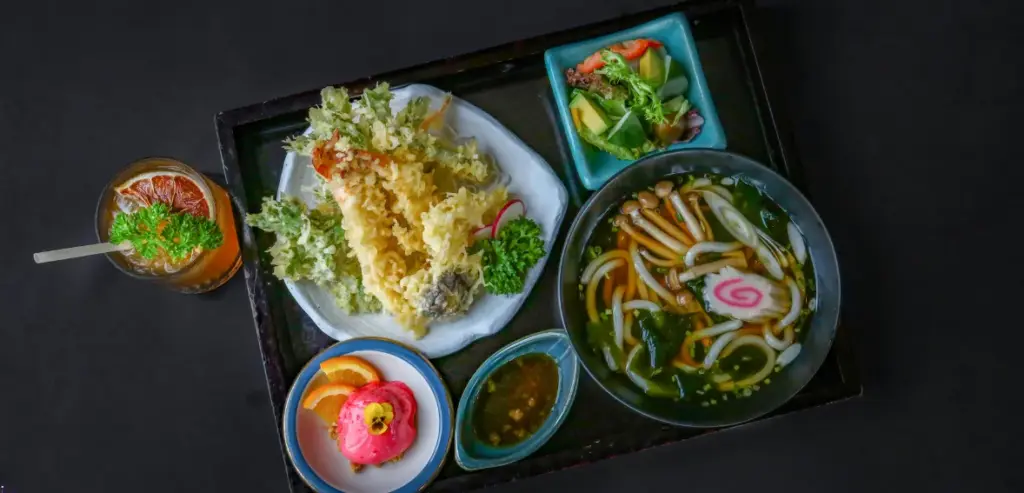
Star items are dishes that represent the most successful dishes on the menu since they are profitable and popular. These dishes have high sales and contribute to healthy margins for restaurants. Therefore, restaurants should highlight star items on the menu to encourage customers to order them. They may use various techniques, such as strategic placement of star items on the menu to maximize visibility.
Star items should be of consistent quality since they contribute significantly to revenue generation for restaurants. Restaurants may also consider making dishes that follow the same pattern as star items. By identifying what makes star items successful in terms of sales and profitability, restaurants may be able to apply the same principles to other dishes on the menu.
Managing Plow Horse Items
Plow horse products are dishes that consumers often order. but with low profit margins. It is essential to consider plow horse products to ascertain whether any modifications can be made to improve profitability.
For example, it may be wise to increase the prices of such products or reduce the quantities of the products without compromising quality. It would be unfortunate to remove such products from the menu, as consumers have already developed a taste for them.
It is essential to consider how to improve plow horse products without compromising customer satisfaction. Managing plow horse products ensures that consumers’ favorite products remain profitable to the business.
Improving Puzzle Items
Puzzle items are profitable dishes that are not frequently sold. These dishes have high contribution margins but are low in popularity among customers. Therefore, restaurants face the challenge of determining why customers do not purchase puzzle items.
Sometimes it is because of where the puzzle items are placed on the menu, how expensive they appear to be, or how well they are described. By making puzzle items more visible in restaurants, sales may be improved.
This may be achieved by moving puzzle items to more prominent sections of the menu. By making puzzle items more appealing through names and descriptions, restaurants may be able to encourage customers to purchase more of these profitable dishes without having to raise food costs.
Evaluating Dog Items
Dog items are those menu items that are not performing well in terms of popularity and profitability. These are not selling well and are not profitable when they are selling. Restaurants should analyze these dog items to assess whether they are still useful on their menu.
Some of these items may still be useful on the menu in terms of diversity and nutritional value. Yet, most of these dog items are not useful and can be removed or replaced with better-performing ones. Getting rid of these items from a menu is important to simplify operations and reduce waste. Simplification of a menu is important to identify those items that are profitable to a business.
Conducting Menu Item Cost Analysis
Accurate menu engineering requires precise cost analysis for each dish. This is done by calculating the total cost of ingredients used in preparing a particular dish. This is normally achieved by developing a standard recipe for all dishes in a restaurant, which indicates the amount of ingredients used in preparing a particular dish.
After obtaining the cost of ingredients for a particular dish, it is then possible to calculate the food’s cost percentage and contribution margin for a particular dish. This is because, without a precise cost analysis, there is a high possibility of losing money by reducing the price of a dish. In addition, there is a need to update the cost of ingredients since food prices are constantly changing.
Using Sales Data for Menu Analysis

Sales data is of great value for menu performance assessment. This is because most modern POS systems for restaurants can generate reports about the sales of menu items. Restaurant managers can use this data to determine the popularity of menu items and compare it to their contribution margin.
Analyzing sales data for several months can help restaurants obtain better insights than relying on data for just one week. Seasonal sales, promotions, and other events can affect menu performance. By relying on long-term sales data, restaurants can obtain better insights. Menu decisions can be made by combining sales data and cost analysis, enabling restaurants to improve profitability and efficiency.
Conclusion
By fusing financial research with insights into consumer behavior, menu engineering enables restaurants to make more informed judgments. Owners can analyze both contribution margin and popularity to see how each item impacts profitability rather than speculating which items work best.
Restaurants can choose which items to promote, modify, or eliminate by using the menu engineering matrix, which offers a clear framework for recognizing stars, plow horses, puzzles, and dogs. Menu engineering becomes a potent tactic for enhancing pricing and menu design when it is backed by precise food cost calculations and trustworthy sales data.
Menus are kept in line with shifting ingredient prices and consumer preferences through regular analysis. In the end, eateries that regularly implement menu engineering can boost revenue while preserving a desirable eating experience that promotes repeat business.
FAQs
What does menu engineering contribution margin mean?
The gap between a menu item’s selling price and its food cost is known as the contribution margin. It displays the portion of the item’s profit that goes toward paying operating costs.
How do restaurants measure the popularity of their menu items?
POS sales data are often used by restaurants to determine how frequently each dish is ordered during a given time frame.
What are the four categories in a menu engineering matrix?
The four categories are stars (high popularity and profit), plow horses (popular but lower profit), puzzles (profitable but less popular), and dogs (low popularity and profit).
How frequently should menu engineering be carried out?
To modify prices, ingredients, or promotions, most restaurants evaluate menu performance on a quarterly or seasonal basis.
Can menu engineering increase the profitability of restaurants?
Yes. Restaurants can boost overall profitability without raising prices across the board by highlighting profitable dishes and making adjustments to underperforming items.